Tooru confronts his father about their family and his abandoned writing
Even If This Love Disappears From the World TonightTooru confronts his father about their family and his abandoned writing in a scene where two long-avoided truths finally become speakable: Sanae has spent years holding the household together, and her father has stopped submitting his manuscripts because he fears rejection. The confrontation begins after the Akutagawa Prize announcement identifies the successful young writer Keiko Nishikawa as Sanae, and ends with father and son sitting in silence, newly honest but uncertain what comes next.
The News About Sanae
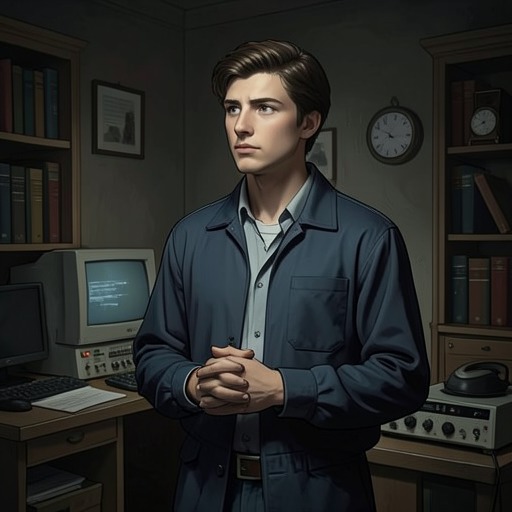
The immediate occasion is the announcement of the Akutagawa Prize. Tooru’s father has looked online to find out who won and recognizes the name Keiko Nishikawa. Seeing the photograph from the press conference, he realizes that the writer is Sanae. He asks Tooru whether he knew. Tooru has anticipated that this day would come; even while riding home from Hino’s house, he had been thinking about the possibility of his father discovering the truth and about the serious conversation that would follow.
The news makes Sanae’s absence newly concrete. Her father wonders whether she no longer wants to live with them. Tooru answers that the question is not whether she wants to return: she has worked hard for the family for years and kept it together from her first year of junior high. Now, he says, she must be allowed to follow her own path. His defense of her independence is complicated by his admission that he, too, had waited for her to come back. Before he met Hino and Wataya and built a world of his own, her return had seemed like his only wish—and, in his mind, almost his whole life. His father’s question about what will become of the two of them shifts the conversation from Sanae’s success to the family they have left between them.
Turning the Conversation on His Father
Tooru challenges his father’s account of himself with unusual directness. He tells him that he is drunk not only on alcohol but on self-images: the widower, the struggling author, and the man who imagines that he might become a novelist. Tooru recognizes that he would not normally speak so harshly, but this time his father meets his eyes. Their usual evasions have included a literal failure to look directly at one another; Tooru acknowledges that he, too, has avoided confronting the truth.
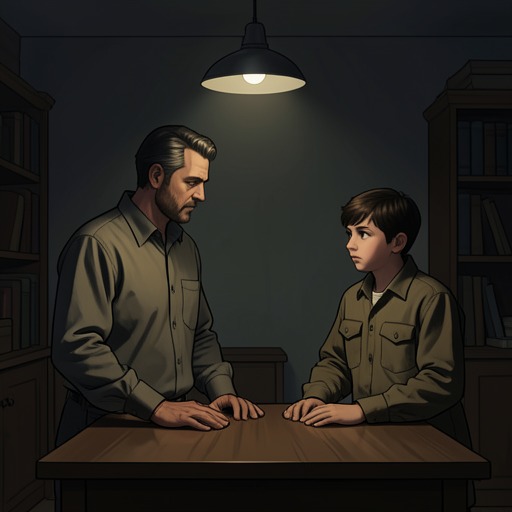
When his father insists that he genuinely wants to be a writer and still intends to pursue it, Tooru refuses to accept the declaration as sufficient. He argues that his father does not submit his work because he is afraid of being hurt, and urges him to stop fearing the pain that might come with trying. The challenge turns physical for a moment: his father grabs Tooru by the collar, and the two stare at close range. Tooru braces himself for the possibility that his father might strike him, but says he does not care; moving forward requires facing pain rather than escaping into self-deception. His father’s expression, however, shows misery rather than anger.
The Manuscripts in the Closet
The struggle changes direction when Tooru’s father reveals that he already knew the manuscripts were not being sent. He had found addressed envelopes stuffed with Tooru’s work in the closet while cleaning his room. The envelopes were not conclusive proof, but they led him to suspect that Tooru had stopped entering the contest and perhaps given up writing. Tooru’s accusation therefore turns out to have been aimed at a pattern he had recognized in his father while concealing a related truth about himself.
The discovery explains why the confrontation cannot settle into a simple lecture from son to father. Tooru has pressed his father to risk rejection, but his own unsent manuscripts expose the same retreat. His father’s knowledge also recasts the household cleaning: in the course of doing that work, he encountered the physical evidence of his son’s stalled ambition. The envelopes make avoidance visible, something each man can no longer dismiss as merely an intention or a private fear.
Admission Without an Easy Resolution
Tooru’s father apologizes for running away for a long time. He names the ways that flight shaped family life: he avoided housework and left Tooru and Sanae to do it, and he stopped submitting to the contest because he feared learning, after losing Tooru’s mother, that he lacked the ability to write. He accepts Tooru’s central charge rather than defending his silence. The confession connects his abandoned literary ambition to both grief and the practical burden he placed on his children.
Afterward, his strength seems to leave him; he sits down limply. Tooru hesitates, then sits beside him. His father squeezes the sides of a half-empty beer can while they remain at a loss for what to do next. Tooru reflects that life does not unfold like fiction, where characters might know how to understand one another. Reality is drier: the two sit as if they have sunk into the floor. The scene’s consequence is not a neat solution to the family’s problems, but a change in what can be faced. The father has admitted his fear and his failures, while Tooru has exposed his own hidden manuscripts; their silence now follows honesty rather than evasion.